Case Study
Annual Golf Tournament Marketing Campaign: Every Spot Sold, an Extra Course Opened, and a Surge in Women's Participation
Delta Chamber of Commerce is a regional chamber of commerce working in economic development, networking, business events, and conferences. One of its flagship events was the annual golf tournament: a long-standing, well-known, and profitable event that faced a growing challenge — a persistent decline in women's participation.
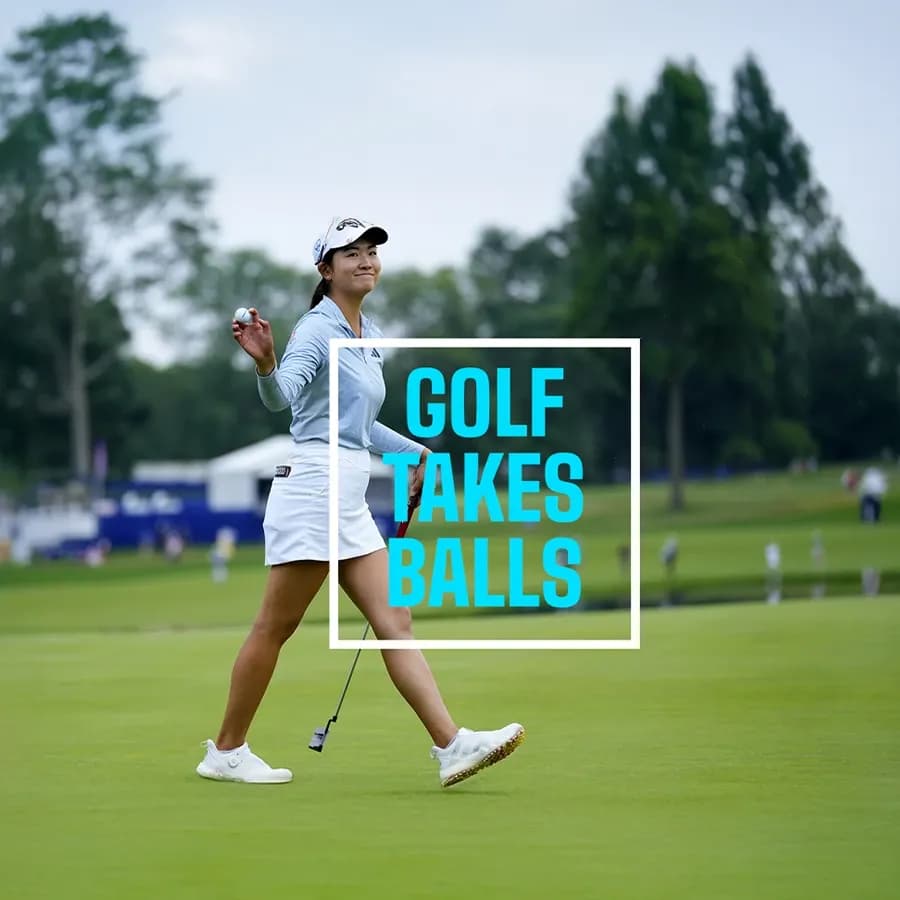
As part of the project, we created a bold event marketing campaign called Golf Takes Balls. A creative move designed to spark conversation, attract media attention, change the perception around the event, and bring women back to center stage.
The result: attendance doubled, every spot in the tournament sold out, an additional course was opened and also sold out in full, and women's memberships in the organization grew by double digits.
- Client
- Delta Chamber of Commerce
- Industry
- Chamber of commerce
- Business events
- Annual golf tournament
- Deliverables
- Strategy
- Creative
- Landing page
- Social media
- Public relations
- Results
- 2x attendance
- Sold out
- Extra course sold out in full
- Growth in women's memberships
01Background
The Delta Chamber of Commerce runs business events, networking meetups, and conferences throughout the year, aimed at strengthening the regional business community, encouraging connections between businesses, and supporting economic development.
The annual golf tournament was one of the Chamber's flagship events. It combined networking, sponsorships, business visibility, and revenue generation. Over time, however, a clear gap emerged between the event's potential and its actual image.
Although it was a broad business event, more and more women felt it was not meant for them. The decline in women's participation reinforced that perception, turning the challenge from a purely marketing problem into an image, community, and business one.
02The Challenge
The central challenge was to stop a three-year decline in women's participation in the annual golf tournament.
Beyond the attendance numbers, there was a problematic perception to confront: the event was seen as belonging mostly to men. As a result, fewer women registered, fewer attended, and fewer saw the event as a relevant business networking opportunity.
The decline in women's participation created a broader risk:
Damage to diversity and the sense of inclusion around the event
Reduced attractiveness for sponsors
A risk to tournament revenue
The weakening of a flagship event in the Chamber's calendar
A missed opportunity to strengthen the connection between women in the business community and the Chamber
The goal was not just to sell more tickets. The goal was to change the story around the event.
03Goals
The campaign's main goals were:
Stop the decline in women's participation in the tournament.
Significantly increase the number of women attending the event.
Change the perception that the event “belongs to men”.
Create public and media conversation around the event.
Strengthen the Chamber's values of inclusion and diversity.
Increase total registrations and attendance.
Improve the event's attractiveness for sponsors.
Convert interest in the event into growth in women's memberships in the Chamber.
04The Solution
Instead of marketing the golf tournament as just another business event, we created a campaign with a sharp, memorable, unapologetic statement: Golf Takes Balls.
The provocative slogan played on the familiar golf expression, but used it to deliver the opposite of the expected message: golf, business, and networking do not belong to one gender.
The campaign turned the event from a routine golf tournament into a bold statement about inclusion, confidence, women's presence, and changing perceptions.
The creative was built to spark curiosity, provoke reactions, earn media attention, and get people talking about the event before it even took place.
05The Creative Concept
Golf Takes Balls
The campaign was built on a simple but powerful message: to participate, lead, play, connect, and be part of the business community, you don't need to be a man. You need courage, presence, and the will to be part of the game.
The slogan was chosen precisely for its ability to stop the scroll, raise a smile, generate conversation, and break the familiar template of business event marketing.
The creative move was not meant to be provocative for provocation's sake. It was meant to open a conversation about who feels they belong, who is invited to take part, and how a long-standing event can become relevant to a broader, more diverse audience.
06What We Actually Did
Research and positioning
In the first stage we conducted in-depth research covering the audience, the barriers to participation, how the business community perceived the event, and the shaping of a new point of view for the tournament.
The goal was to understand why fewer women were taking part, what kept them from seeing the event as a relevant opportunity, and which message could shift the perception without giving up the event's business and community character.
Out of the research came a new positioning: the golf tournament not just as a networking event, but as a platform for participation, inclusion, and women's visibility in the business community.
Creative and campaign development
Once the concept was set, we developed the campaign language around the Golf Takes Balls message.
The work included messaging, graphic assets, social media content, event promotion materials, PR messaging, and a dedicated landing page designed to present the event clearly, intriguingly, and with a strong call to action.
The creative language was built to stand out amid the noise of business event marketing and turn the tournament into a talking point.
Event landing page
We created a focused landing page designed to present the event, explain the concept, drive registration, and gather all the relevant information in one place.
The landing page served as the campaign's hub: users were directed to it from social media, advertising, emails, and media coverage.
The emphasis was on a clear message, a simple registration experience, and a sense of urgency around the limited number of spots.
Launch and amplification
At launch we distributed the campaign across channels, including social media posts, PR activity, outreach to local influencers, and messaging designed to spark conversation around the event.
The campaign did more than announce that registration was open. It created a media narrative: a business golf tournament setting out to change the rules of the game and invite more women to take part.
Public relations and media coverage
The provocative message and the campaign's social angle generated wide media interest.
Coverage included articles in local newspapers, blog mentions, radio programs, and even an appearance on a local TV news channel.
The media coverage strengthened awareness of the event, expanded the campaign's reach, and turned the tournament into a wider conversation about inclusion, women's visibility, and a diverse business community.
Post-event nurturing
The campaign did not end on event day.
After the tournament, a follow-up process was built that included emails, targeted messages, and a Chamber membership offer for women who attended or expressed interest.
The goal was to turn the event's one-time success into ongoing growth in the Chamber's business community.
Instead of treating the event as an end point, we used it as the starting point of a longer relationship with a new and relevant audience.
07Timeline
Research and positioning: 4 weeks. Interviews, understanding barriers, shaping the concept and message.
Creative production: 3 weeks. Media assets, messaging, visual language, and a landing page.
Launch and amplification: one month. Posts, PR, local media, and influencers.
Post-event nurturing: two weeks. Emails, ongoing communication, and a membership offer.
08The Strategic Approach
The strategy connected three key stages:
1. Changing the perception
The campaign set out to break the perception that the tournament was a men's event and present it as an open, accessible business event, relevant to women and men alike.
2. Creating conversation
With a sharp, memorable slogan, the campaign generated interest, reactions, and media coverage. Instead of chasing attention, the message itself became the distribution engine.
3. Converting interest into results
Exposure and interest were translated into registrations, sold-out spots, an additional course, and, after the event, growth in women's memberships in the Chamber.
09The Results
The campaign turned the golf tournament from an event suffering a decline in women's participation into a prominent, talked-about, in-demand event.
The key results:
Attendance doubled.
The share of women participating reached an all-time high and exceeded the target.
Every spot in the tournament sold out.
Demand led to an additional course being opened.
The additional course also sold out in full.
Women's memberships in the organization grew by double digits.
The campaign earned wide media coverage across local media, blogs, radio, and TV.
Key metrics
- 2xAttendance
The number of tournament participants doubled following the campaign.
- RecordWomen's participation
The share of women participating reached an all-time high and exceeded the target.
- Sold OutEvery spot sold
Every spot in the tournament sold out.
- Extra courseSold out in full
Demand led to an additional course being opened, and it, too, sold out completely.
- Double digitsGrowth in women's memberships
Interest in the event translated into growth in women's memberships in the Chamber.
- PRWide media coverage
The campaign earned exposure in local press, blogs, radio, and local TV news.
10Business Impact
The campaign created an impact broader than the event itself.
At the immediate level, it increased registrations, filled the tournament, created demand for an additional course, and strengthened the event's revenue potential.
At the strategic level, it changed the perception around the golf tournament and presented the Chamber as an organization that promotes inclusion, diversity, and women's presence in the business community.
At the organizational level, the campaign turned attendees and interested prospects into potential members, driving a significant increase in women's memberships in the Chamber.
11Why It Worked
The campaign succeeded because it did not try to fix a participation problem with more ordinary advertising.
Instead of promoting the same event the same way, we changed the story around it.
The Golf Takes Balls message created positive tension: bold enough to attract attention, simple enough to remember, and relevant enough to connect to the event's real challenge, the sense of belonging.
With the creative, public relations, landing page, social media, and post-event communication working together, the campaign generated awareness, registrations, and long-term impact on memberships in the organization.
12What We Can Learn
An effective event marketing campaign does not start with the question of how to sell tickets. It starts with the question of why people should feel the event is relevant to them.
In this case, the problem was not just low awareness. The problem was perception. So the solution had to be sharper, braver, and more connected to the audience.
The campaign proved that when an event gets a clear story, a memorable message, and the right follow-through, it can turn from a routine event into a platform for community and business growth.
13Services Provided
Event marketing strategy
Audience research and positioning
Creative concept development
Campaign messaging and copywriting
Creative language development
Media asset production
Event landing page
Social media campaign
Public relations
Influencer and local stakeholder outreach
Event registration promotion
Post-event communication
Nurture campaign and membership offer
14Summary
The work with the Delta Chamber of Commerce shows how an event marketing campaign can do far more than fill spots at an event.
With a bold creative concept, a clear message, public relations, a landing page, and a post-event follow-up process, we turned an annual golf tournament into a more talked-about, inclusive, and profitable event.
The campaign stopped a three-year decline in women's participation, doubled attendance, sold out every spot, led to an additional course that also sold out in full, and produced a double-digit percentage increase in women's memberships in the Chamber.